Rodents in the Garage — McKinney, TX
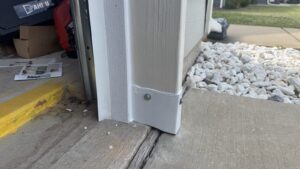
There was a large gap at the corner of the garage door that rodents were entering the garage through.
Proudly Serving Anna and Surrounding Communities
Homeowner called in and requested an inspection because they saw a large amount of rodent droppings in the attic. They tried trapping themselves, but were unsuccessful.
At the time of the inspection, identified roof rat activity in the attic. The homeowner had a roofline area where rodents were getting into the attic. They had tried sealing the corner of the garage, but did it with expandable foam. When you perform an exclusion job like this using expandable foam, the foam soaks up moisture and rainwater and causes rot along the bottom of the garage door jambs. Recommended removing the expandable foam and resealing with sheet metal garage guards.
We have a three-step approach that we often refer to as TAPR. It consists of trapping, avoidance and population reduction. Avoidance means sealing off any potential entry points and removing what attracted the rodents in the first place, including accessible food and water sources. Population reduction is the installation and servicing of exterior rodent bait stations.
This visit was an inspection and a quote. The work described here had not been carried out at the time of writing.
Spray foam rodent exclusion fails for two reasons, and this Anna homeowner met both at once. Foam is soft enough for a rat to chew through, and it holds water. We inspected the house on 17 September 2026 and found roof rat activity in the attic, even though the garage door corners had already been sealed with expanding spray foam. The seal had stopped nothing. Where that foam met the bottom of the garage door jambs, it was also holding rainwater against the wood and setting up rot.
The homeowner had done the sensible thing first. They saw a large amount of droppings in the attic and set traps themselves, and it did not resolve the problem. That is the usual outcome when the way in is still open. So we recommended removing the foam, fitting sheet metal garage guards at the door corners, closing the roofline gap, and only then trapping. This visit was an inspection, and the work is quoted rather than done.
Trapping removes the rodents already inside. It does nothing about the opening that let them in. Catch six rats in an attic with an open roofline and the space simply fills again, because a vacancy in good harborage does not stay vacant.
So we treat trapping as one third of the job. Removal without exclusion is a running cost.
The corners either side of a garage door are a genuine weak point, and sealing them is the right instinct. Expanding foam is simply the wrong material. A rat chews through cured foam without much trouble, so it buys very little time as a barrier.
The bigger problem is moisture. Foam at that corner sits low, close to the driveway, and it absorbs water. Every rain soaks it, and it holds that water against the bottom of the jamb instead of letting the wood dry. Given a season or two, you get rot in exactly the place that is expensive to repair. A do-it-yourself seal can therefore cost more than the rodents would have.
Sheet metal garage guards solve both halves. Rodents will not chew through them, and metal does not wick water into the jamb.
The actual entry was higher up, at a roofline gap. Above it sat solar panels. The gap between the array and the roof deck is sheltered, shaded and hard to see from the ground. Rodents use that space as cover, and from there the roofline is only a short move away.
September matters too. As nights cool, rodents that lived outside all summer start testing buildings for somewhere warm, which is the same pattern behind the sudden indoor activity people notice when the weather turns.
Droppings are the obvious sign, and they were plentiful here. The more costly finding was chewing on the foam pipe insulation. Rodents take that material for nesting, but the insulation wraps the PEX water lines. Chewing that starts as nest gathering can end as a water leak inside the house, and a leak in an attic is discovered late by definition.
We work rodent jobs in three parts. Trapping removes what is inside. Avoidance seals the entry points and takes away what attracted them, including accessible food and standing water. Population reduction uses serviced exterior bait stations to lower the pressure arriving from outside.
Each part is weak alone. Together they address the animals present, the route they used, and the supply behind them.
The inspection and the recommendation are complete. The spray foam rodent exclusion work itself is quoted and not yet carried out, and we will add the result here once it is. A page claiming an outcome before the work happens is not evidence of anything.
If you are seeing droppings in your own attic, our rodent control in Anna page covers how we approach these, or you can request a quote and we will take a look.
Real jobs from our own records — what the inspection found, and why we treated it the way we did.
There was a large gap at the corner of the garage door that rodents were entering the garage through.
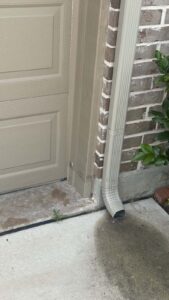
Upon the inspection, it was determined that the concrete was slightly sloped in addition to the gap at the garage door corner that was…
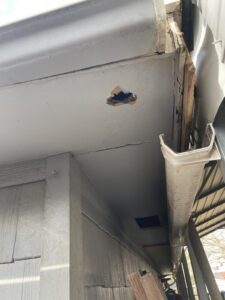
Holes in the soffits form rodents chewing through


More on this: Rodent Control in Anna